

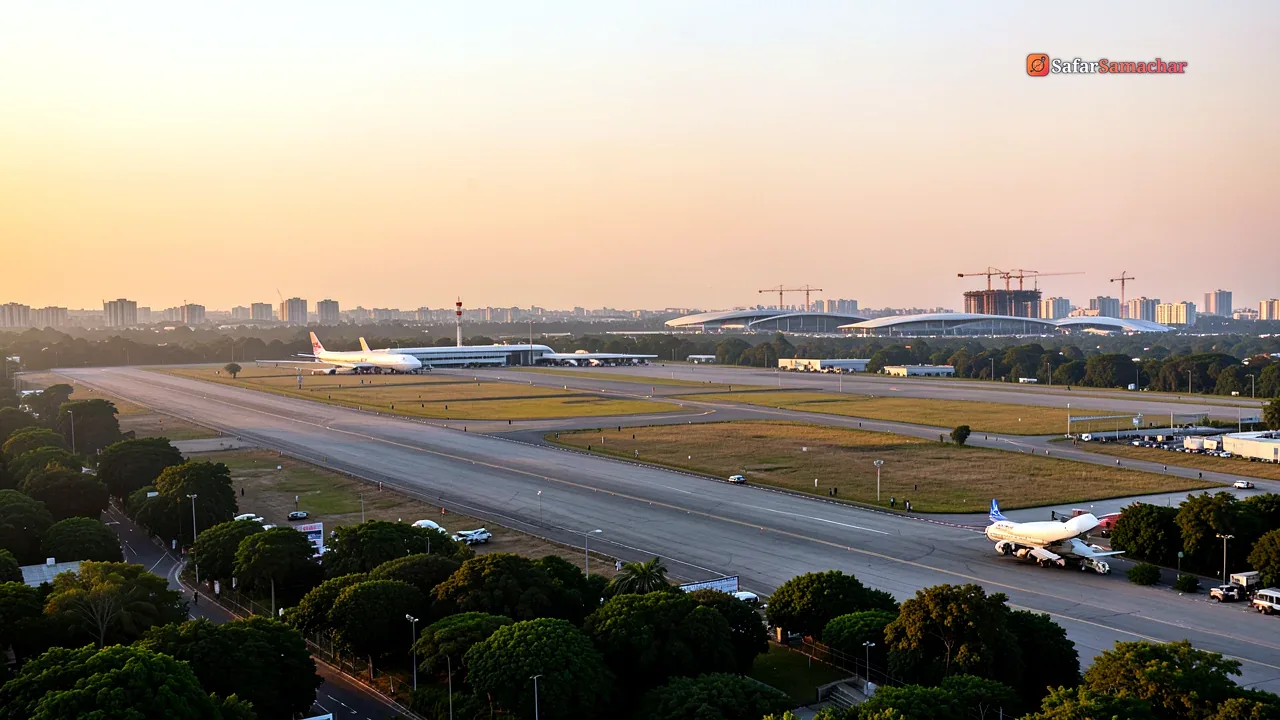
The expansion of Mumbai's airports has become a major test case for the Adani Group as it navigates the redevelopment of legacy infrastructure while launching the new Navi Mumbai International Airport. The Adani Group plans to demolish and redevelop Terminal 1 at Chhatrapati Shivaji Maharaj International Airport (CSMIA), which is over 60 years old.
To manage capacity during the redevelopment, Adani intends to shift flights for 14 international routes—including destinations such as Doha, Dhaka, Muscat, and Kuwait City—to the new Navi Mumbai International Airport starting next summer.
However, splitting operations across two airports located roughly 50 kilometers (31 miles) apart is expected to increase logistical and operational costs for both airlines and passengers. The plan has drawn resistance from airlines, who have raised concerns about the reallocation of takeoff and landing slots.
Political leaders have also intervened; Maharashtra Chief Minister Devendra Fadnavis wrote to the Union Civil Aviation Minister, proposing that Terminal 1 be redeveloped in phased sections—such as shifting operations from Terminal 1A to 1B—rather than shutting the entire terminal down at once.
The project is also a broader test of how private infrastructure operators manage urban congestion, municipal support, and corporate dominance in India. With the Mumbai metropolitan region currently handling up to 75 million passengers annually, against a projected demand of 140 million by 2040, the success or failure of this initiative could have significant implications for future infrastructure projects in the country.